

Nurphoto | Nurphoto | Getty Images
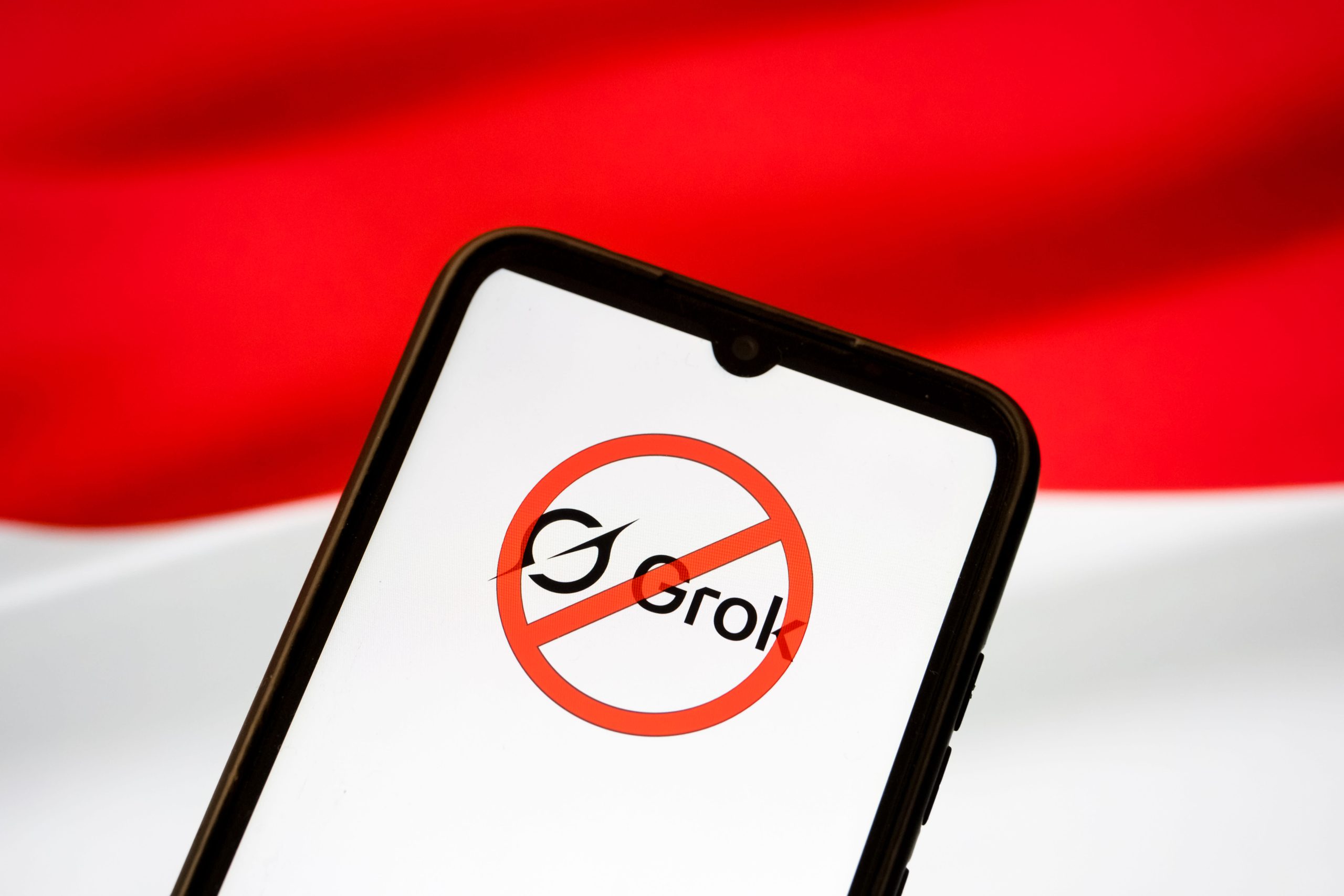
Malaysia and Indonesia blocked access to Elon Musk’s artificial intelligence chatbot Grok over the weekend due to concerns that the tool was being used to generate nonconsensual, sexually explicit content.
Malaysian regulators ordered temporary restrictions be placed on the chatbot from xAI on Sunday following “repeated failures by X Corp” to address risks associated with the AI tool.
The move came just one day after Indonesia stepped in to pause access to Grok over similar concerns and summoned X officials on the matter, according to CNBC’s translation of the statement.
The Southeast Asian countries’ actions come after it was discovered that xAI’s Grok enabled users to easily generate and share images online that included nonconsensual explicit images and child sexual abuse material (CSAM).
Musk’s company had recently updated its Grok Imagine features, enabling easier image generation from text-based prompts on the chatbot, which is integrated with Musk’s social media platform X, giving it a wide reach.
Amid escalating concerns over Grok’s content moderation policy, xAI announced it would limit image generation and editing features to paying subscribers, in an effort to patch safeguard gaps that permitted sexualized outputs.
Musk, responding on X, has also asserted that users creating illegal content via Grok would face consequences equivalent to uploading such material directly to the social media platform.
CNBC attempted to reach xAI for comment regarding the developments over the weekend. A press email for the company returned an automatic message that read “Legacy Media Lies.”
“Insufficient” responses
X’s public and private responses amid the controversy have failed to satisfy the concerns of regulators in Indonesia and Malaysia, as well as others that have launched probes.
The Malaysian Communications and Multimedia Commission said that X’s “insufficient” replies have “relied primarily on user-initiated reporting mechanisms and failed to address the inherent risks posed by the design and operation of the AI tool.”
“Accordingly, the restriction is imposed as a preventive and proportionate measure while legal and regulatory processes are ongoing,” the watchdog said. “Access to Grok will remain restricted until effective safeguards are implemented, particularly to prevent content involving women and children.”
Both Indonesia and Malaysia maintain strict anti-pornography laws, which ban the sharing of obscene and sexual content online more broadly.
Meanwhile, Indonesia’s Ministry of Communications and Digital Affairs Meutya Hafid said that “The government views nonconsensual sexual deepfakes as a serious violation of human rights, dignity, and citizens’ security in the digital space.”
Hafid also categorized the misuse of AI for producing fake pornography as a form of “digital-based violence,” according to statements shared by state-owned Antara News.
Authorities in other jurisdictions, including the European Union, the UK, Brazil, and India, have also called for probes into Grok’s role in facilitating obscene deepfakes.
A UK watchdog, the Internet Watch Foundation, said last week that its analysts had discovered “criminal imagery” of children aged between 11 and 13, which appears to have been created using Grok.
Some Democratic lawmakers in Washington have recommended that app stores suspend the AI tool, at least until Musk implements major changes.
In an email to CNBC last week, the Department of Justice said in a statement that “it takes AI-generated child sex abuse material extremely seriously and will aggressively prosecute any producer or possessor of CSAM.”
“We continue to explore ways to optimize enforcement in this space to protect children and hold accountable individuals who exploit technology to harm our most vulnerable,” it added.
— CNBC’s Lora Kolodny contributed to this report.