
The logo of an Apple Store is seen reflected on the glass exterior of a Samsung flagship store in Shanghai, China Monday, Oct. 20, 2025.
Wang Gang | Feature China | Future Publishing | Getty Images
The cost of your smartphone might rise, analysts are warning, as the AI boom clogs up supply chains and a recent change by Nvidia to its products could make it worse.
AI data centers, on which tech giants globally are spending hundreds of billions of dollars, require chips from suppliers, like Nvidia, which relies on many different components and companies to create its coveted graphics processing units.
But other companies like AMD, the hyperscalers like Google and Microsoft, and other component suppliers all rely on this supply chain.
Many parts of the supply chain can’t keep up with demand, and it’s slowing down components that are critical for some of the world’s most popular consumer electronics. Those components are seeing huge spikes in prices, threatening price rises for the end product and could even lead to shortages of some devices.
“We see the rapid increase in demand for AI in data centers driving bottlenecks in many areas,” Peter Hanbury, partner in the technology practice at Bain & Company, told CNBC.
Where is the supply chain clogged?
One of the starkest assessments came from Alibaba CEO Eddie Wu, CEO of Chinese tech giant Alibaba.
Wu, whose company is building its own AI infrastructure and designs its own chips, said last week that there are shortages across semiconductor manufacturers, memory chips and storage devices like hard drives.
“There is a situation of undersupply,” Wu said, adding that the “supply side is going to be a relatively large bottleneck.” He added this could last two to three years.
Bain and Co.’s Hanbury said there are shortages of hard disk drives, or HDDs, which store data. HDDs are used in the data center. These are preferred by hyperscalers,: big companies like Microsoft and Google. But, with HDDs at capacity, these firms have shifted to using solid-state drives, or SSDs, another type of storage device.
However, these SSDs are key components for consumer electronics.
The other big focus is on a type of chip under the umbrella of memory called dynamic random-access memory or DRAM. Nvidia’s chips use high-bandwidth memory which is a type of chip that stacks multiple DRAM semiconductors.
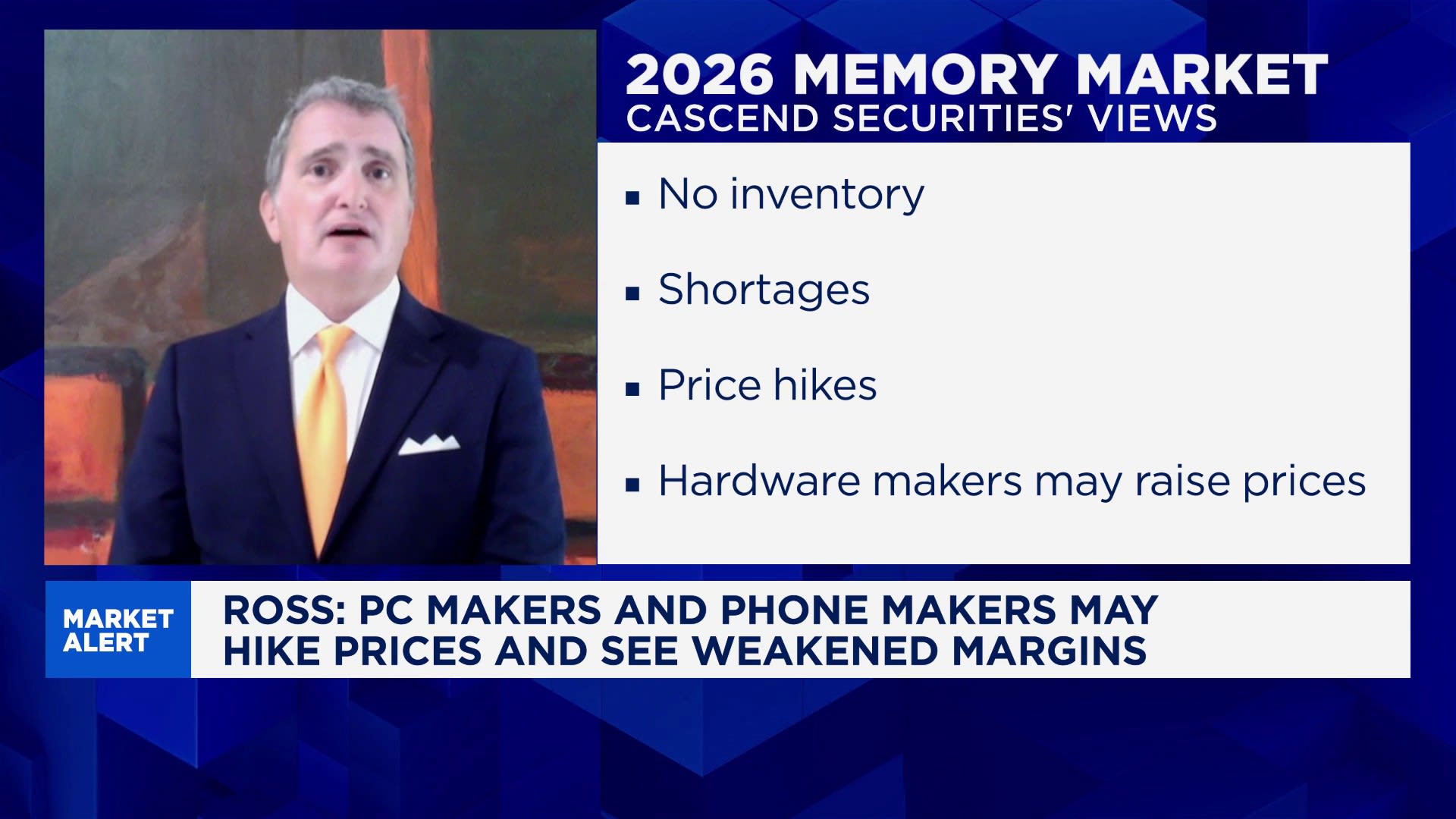
Memory prices have surged as a result of the huge demand and lack of supply. Counterpoint Research said it expects memory prices to rise 30% in the fourth quarter of this year and another 20% in early 2026. Even small imbalances in supply and demand can have major knock on effects on memory pricing. And because of the demand for HBM and GPUs, chipmakers are prioritizing these over other types of semiconductors.
“DRAM is certainly a bottleneck as AI investments continue to feed the imbalance between demand and supply with HBM for AI being prioritized by chipmakers,” MS Hwang, research director at Counterpoint Research, told CNBC.
“Imbalances of 1-2% can trigger sharp price increases and we’re seeing that figure hitting 3% levels at the moment – this is very significant.”
Why are there issues?
Building up capacity in various areas of the semiconductor supply chain can be capital-intensive. And it’s an industry that’s known to be risk-averse and did not add the capacity necessary to meet the projections provided by key industry players, Bain & Co.’s Hanbur said.
“The direct cause of the shortage is the rapid increase in demand for data center chips,” Hanbury said.
“Basically, the suppliers worried the market was too optimistic and they did not want to overbuild very expensive capacity so they did not build to the estimates provided by their customers. Now, the suppliers need to add capacity quickly but as we know, it takes 2-3 years to add semiconductor manufacturing fabs.”
Nvidia at the center
A lot of attention is on Nvidia given it dominates when it comes to the chips that are being put into AI data centers.
It is a huge customer of high bandwidth memory, for example. And its products are manufactured by TSMC which also has other major customers like Apple.
But analysts are focused on a change Nvidia has made to its products that has the potential to add major pressure to consumer electronics supply chains. The U.S. giant is increasingly shifting toward using a type of memory in its products called Low-Power Double Data Rate (LPDDR). This is seen as more power efficient than the previous Double Data Rate, or DDR memory.
The problem is, Nvidia is increasingly using the latest generation of LPDDR memory, which is also used by high-end consumer electronics makers such as Samsung and Apple.
Typically, the industry would just be dealing with demand for this product from a handful of big electronics players. But now Nvidia, which has huge scale, is entering the mix.
“We also see a bigger risk on the horizon is with advanced memory as Nvidia’s recent pivot to LPDDR means they’re a customer on the scale of a major smartphone maker — a seismic shift for the supply chain which can’t easily absorb this scale of demand,” Hwang from Counterpoint Research said.
How AI boom is impacting consumer electronics
Here’s the link between all of this.
From chip manufacturers like TSMC, Intel and Samsung, there is only so much capacity. If there is huge demand for certain types of chips, then these companies will prioritize those, especially from their larger customers. That can lead to shortages of other types of semiconductors elsewhere.
Memory chips, in particular DRAM which has seen prices shoot up, is of particular concern because it’s used in so many devices from smartphones to laptops. And this could lead to price rises in the world’s favorite electronics.
DRAM and storage represent around 10% to 25% of the bill of materials for a typical PC or smartphone, according to Hanbury of Bain & Co. A price increase of 20% to 30% in these components would increase the total bill of materials costs by 5% to 10%.
“In terms of timing, the impact will likely start shortly as component costs are already increasing and likely accelerate into next year,” Hanbury said.
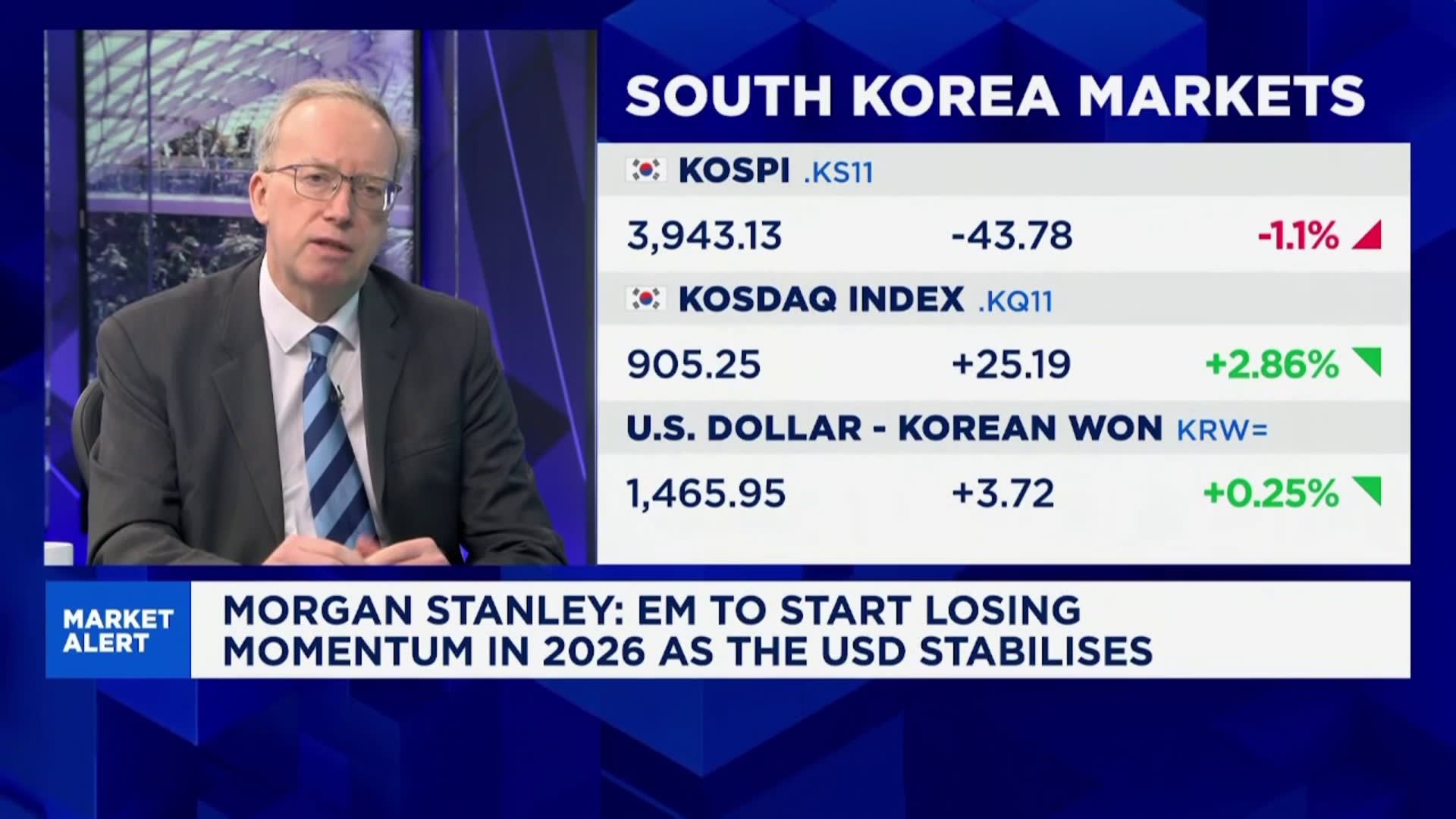
On top of this, there is now demand from players involved in AI data centers like Nvidia, for components that would have typically been used for consumer devices such as LPDDR which adds more demand to a supply constrained market.
If electronics firms can’t get their hands on the components needed for their devices because they’re in short supply or going toward AI data centers, then there could be shortages of the world’s most popular gadgets.
“Beyond the rise in cost there’s a second issue and that’s the inability to secure enough components, which constrains the production of electronic devices,” Counterpoint Research’s Hwang said.
What are tech firms saying?
A number of electronics companies have warned about the impact they are seeing from all of this.
Xiaomi, the third-biggest smartphone vendor globally, said it expects that consumers will see “a sizeable rise in product retail prices,” according to a Reuters reported this month.
Jeff Clark, chief operating officer at Dell, this month said the price rises of components is “unprecedented.”
“We have not seen costs move at the rate that we’ve seen,” Clark said on an earnings call, adding that the pressure is seen across various types of memory chips and storage hard drives.
The unintended consequences
The AI infrastructure players are using similar chips to those being used in consumer electronics. These are often some of the more advanced semiconductors on the market.
But there are legacy chips which are manufactured by the same companies that the AI market is relying on. As these manufacturers shift attention to serving their AI customers, there could be unintended consequences for other industries.
“For example, many other markets depend on the same underlying semiconductor manufacturing capabilities as the data center market” including automobiles, industrials and aerospace and defense, which “will likely see some impact from these price increases as well,” Hanbury said.